A good custom basketball jersey order comes down to five decisions made before anyone opens a design file: your colours and logo, an exact roster with sizes, the printing method, the fabric, and a production timeline that finishes before your first game. Rugby and volleyball shirts follow the same logic with a few sport-specific details. This guide walks Singapore schools, CCAs, companies and community teams through each decision, in the order you will need to make them.
TL;DR
- Fix your brand elements first: primary and secondary colours, mascot and logo, in high-resolution files.
- Build one roster sheet with each player’s name, number and size taken from the supplier’s own size chart, and count spares and staff.
- Choose the printing method by design complexity and fabric: names and numbers, full-colour artwork and crests do not all suit the same method.
- Order six to eight weeks before the first game, and approve a proof before production starts.
- Rugby has laws on shirt construction, so check your competition’s rules before you finalise the cut.
Table of Contents
- Start with the team, not the template
- Count the roster properly
- Basketball, rugby and volleyball: what differs
- Fabric and fit: what to look for
- Printing methods: choosing the right one
- Artwork, names and numbers
- Timing, quantities and ordering details
- Looking after printed team wear
- Our perspective
- Order team jerseys and sportswear with us
- FAQ
- Sources
Start with the team, not the template
Most delays in jersey orders come from the team, not the printer. Colour choices change halfway through, the roster is not final, or the logo arrives as a screenshot. Settle these before you ask for quotes.
A 2026 guide from Sports Lazada advises teams to identify their core brand elements first: primary and secondary colours, the mascot and the logo. If you represent a corporate sponsor, it adds, get their high-resolution brand assets early, because a sponsor’s logo usually has strict rules on colour and spacing.
A short pre-order checklist:
- Colours. Pick a main colour and one or two accents. Dark home jerseys and light away jerseys are a common pairing, so each team always has a contrast option.
- Logo files. Send vector files (such as AI, EPS or PDF) where you can. If all you have is a PNG, say so early and allow time for redrawing.
- Who is on the order. Starters, bench, coaches, managers, practice squad and a few spares for late joiners.
- Who approves. One person signs off the proof. Five people editing a design by group chat is the fastest way to miss a deadline.
- Where it ends up. A single delivery to the school or office is simpler than splitting shipments between homes.
If your group is a school CCA, our guide to affordable CCA T-shirt printing for schools covers budgeting questions that apply to jerseys too.
Count the roster properly
Quantity drives your quote, and quantity is only accurate if the roster is. The Sports Lazada guide recommends working out the exact roster size, including bench players, coaching staff, practice squads and spare jerseys, so the quote reflects what you will really need.
The same guide recommends a standardised roster sheet. Build it as a simple spreadsheet with these columns:
| Column | What to enter | Why it matters |
|---|---|---|
| Player name | As it should print on the back | Spelling errors are the most common reprint cause |
| Number | Assigned and confirmed | Duplicates are easy to miss in a large squad |
| Size | Taken from the supplier’s size chart | Brand charts differ, so never copy from another label |
| Role | Player, coach, manager, spare | Helps with quantity and with who gets which design |
| Notes | Left-handed fit, longer length, captain’s armband | Avoids last-minute changes |
When the sheet is complete, freeze it. Every later change to a name or a number is a change to production, and late changes are where schedules slip.
Basketball, rugby and volleyball: what differs
The three sports share a printing process, but the garment itself is different.
Basketball jerseys
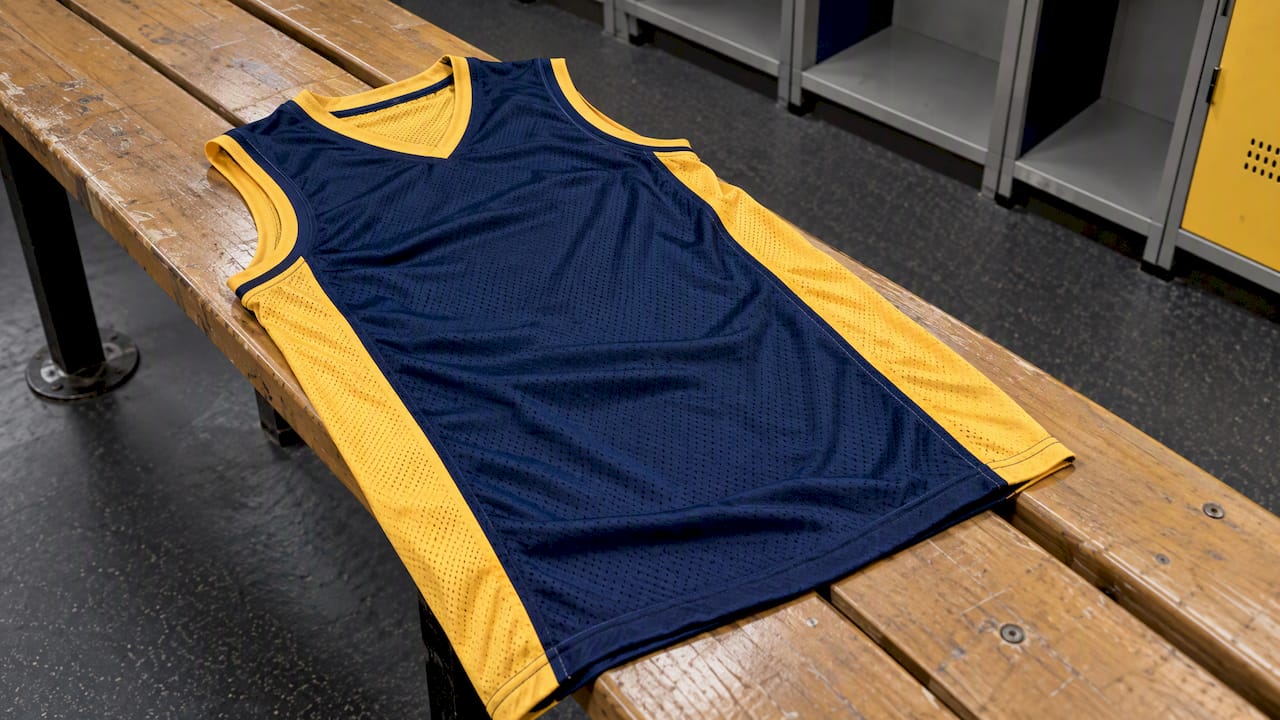
Basketball jerseys are sleeveless, cut with wide armholes, and usually paired with matching shorts. Players move constantly in a hot, humid hall, so fabric weight and ventilation matter more than anything else on the label. Numbers go on the front and back, and a surname or team name usually sits above the back number.
Reversible jerseys are popular with school teams because one garment serves as home and away. If you want them, mention it at the quoting stage, since it changes both the fabric and the printing approach.
Rugby shirts
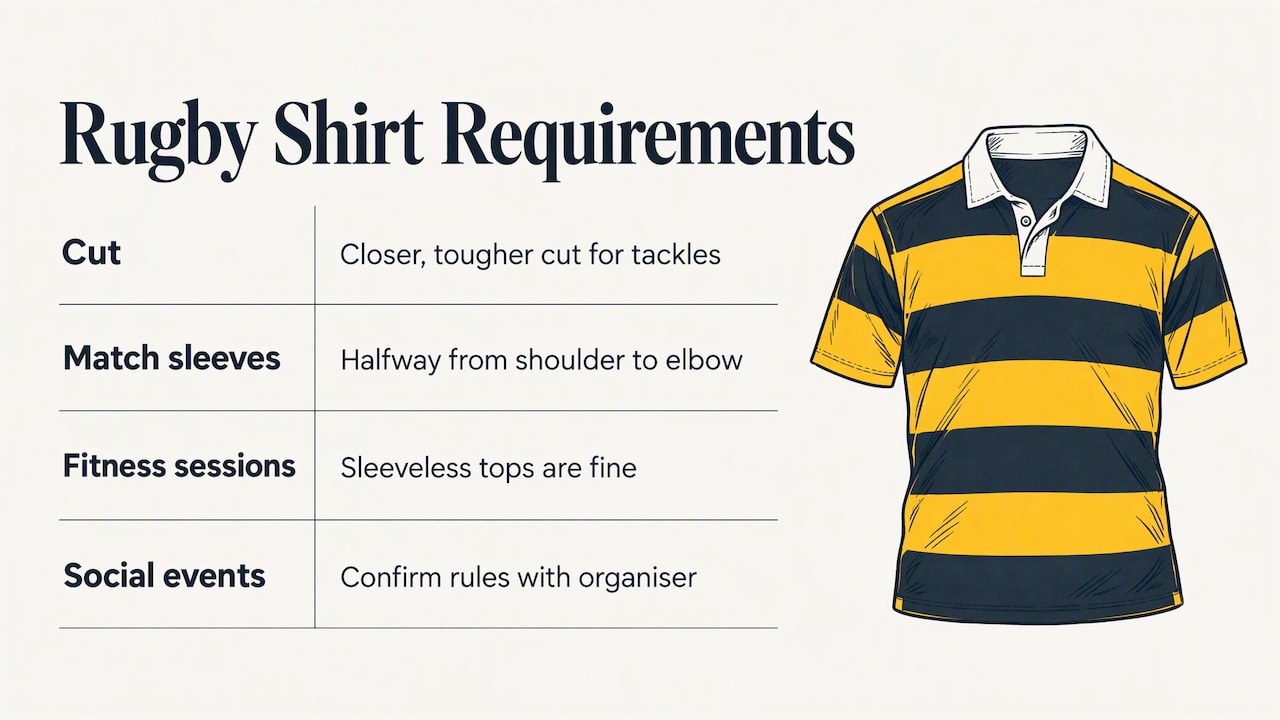
Rugby shirts are cut closer and are tougher, because they are pulled and gripped in every tackle. If your team plays in a sanctioned competition, the garment has to meet the sport’s laws. For example, World Rugby’s laws specify that jersey sleeves must extend at least halfway from the shoulder point to the elbow. A sleeveless training top is fine for fitness sessions, but check the rules for match wear before you order a full set.
For social and corporate touch rugby or tag events, rules are usually looser, but confirm with the organiser. Collars, sleeve length and stitching are all easier to fix at design stage than after printing.
Volleyball shirts
Volleyball shirts are lighter and closer to a fitted T-shirt or sleeveless cut, because players reach overhead constantly. A shirt that rides up when you raise your arms is a problem, so test the length. Numbers are needed on the shirt, and many teams also add a libero in a contrasting colour. Ask your league or school sports coordinator for any number or colour requirements before you finalise the design.
In all three sports, a quick message to your league or competition organiser costs nothing and can save a reprint.
Fabric and fit: what to look for
Cotton is comfortable for a casual team T-shirt, but it holds sweat and gets heavy. For match play, most teams choose lightweight polyester-type performance fabrics that draw moisture away from the skin and dry fast. Look for mesh or eyelet panels for airflow, and ask whether the fabric is suitable for the printing method you plan to use, since not every fabric takes every print.
If you want to understand what terms like moisture wicking, cooling construction and breathability mean in practice, performance fabric information from an activewear label gives a useful picture of the material features to ask about.
Fit checklist before you approve:
- Use a sample or size set. Have two or three players of different builds try the supplier’s sizes before you commit to the full order.
- Check the armholes and hem. Players should be able to raise both arms fully without the hem lifting.
- Check the neckline. A neck that is too tight is the most common complaint in long games.
- Consider growth. For school teams, order for how students are now, not how you hope they will grow, but do add spares for new joiners.
- Think about modest options. Some players prefer long sleeves or longer lengths. Raise this early so the garments can be planned for the whole team consistently. We also work on Muslimah attire, so a mixed team can look unified without anyone being left out.
Durability depends on both fabric and decoration. A print that sits well on a flexible performance fabric will move with the player. A thick, heavy print on a stretchy fabric can feel stiff. Ask your printer which combinations they recommend.
Printing methods: choosing the right one
Team apparel is decorated in a handful of ways. Here is how they usually compare in practice.
| Method | Best for | Watch out for |
|---|---|---|
| Sublimation | Full-colour, all-over designs on polyester, with names and numbers built into the artwork | Works on light polyester fabric; the design is part of the garment rather than a layer on top |
| Heat transfer (vinyl or film) | Names, numbers and small logos, especially for small or mixed runs | Sits on the surface, so quality depends on the film and pressing |
| Screen printing | Simple designs in few colours on larger runs | Each extra colour adds set-up; fine gradients are difficult |
| Embroidery | Crests, badges and caps | Heavier and better suited to patches than large areas on a sports top |
The most useful question is not which method is best but which is right for this design. A jersey with a gradient, a pattern across the body and a name and number on the back is a different job from a plain training top with a chest logo. If you are weighing options, our guides on how to choose a printing method and screen printing versus DTG versus vinyl explain the trade-offs in more detail, and the complete guide to materials, methods and costs puts them side by side.

Artwork, names and numbers
Good artwork is the single biggest factor in how a jersey looks on court. Prepare these before sending anything:
- Logo in vector format, plus a flat, single-colour version for areas where colour printing is not practical.
- Colour references. Screens differ from fabric, so give a Pantone reference or a colour sample if your school or sponsor has a brand colour.
- Number style. Choose a bold, simple typeface that can be read from across a court or pitch. Thin or script numbers are hard to read at distance.
- Name style. Surnames or nicknames in capital letters read better than long full names. Check spelling twice.
- Placement. Decide where the logo, sponsor logos, numbers and team name go on the front, back and shorts, and keep sponsor marks to a sensible size.
If you do not have a designer, you do not need one. Our tips for non-designers cover the basics of making artwork that prints well, and our team can help turn a rough idea into a print-ready file.
Timing, quantities and ordering details
Plan backwards from your first match. The Sports Lazada guide suggests placing orders six to eight weeks before the first game, allowing for design, sampling, manufacturing, and shipping and customs clearance into Singapore. That timeline fits overseas production. Local printing can be quicker, but you still need time for artwork, proof approval, production and delivery, so do not leave it to the last fortnight. Confirm lead time in writing with your supplier.
What to ask every supplier before you order:
- Minimum order quantity. Some suppliers accept small runs, others set a minimum. Ask.
- Proof. Will you see a digital mock-up with names and numbers before production, and who signs it off?
- Sample or size set. Can your team try sizes first?
- Turnaround. How many working days from approval to delivery, and does that change at busy periods such as the start of the school year or before inter-school competitions?
- Delivery. Where is it going and who signs for it?
- Reprints. What happens if a name is misprinted, and what happens if a name was wrong on your sheet?
- Price in full. Does the quote include names, numbers, shorts and packing, and is GST included?
Our guide to what to know before choosing a printing company goes through these questions in more detail, and from design to delivery shows what each stage looks like.
Looking after printed team wear
Care instructions depend on the fabric and the print, so follow the label and any guidance your supplier gives you. As general good practice, turn printed garments inside out before washing, use cool water, avoid tumble drying with high heat, and do not iron directly over prints. Rinse and hang sweaty kit soon after matches instead of leaving it in a bag, which is better for both fabric and smell.
It helps to hand the team a single care note with the jerseys. It saves players from guessing and helps the set last more than one season.
Our perspective
Most teams come to us with a date, a colour and a vague idea. The orders that go smoothly are the ones where we sort out the roster and the artwork first and the printing second.
We handle the whole process, from design and planning through printing, packing and delivery, so a teacher, coach or manager does not have to chase five different people. Our advanced printing technology and full customisation of design, material and delivery are there so that the jersey fits the team, rather than the team fitting a template.
Our advice is simple: give us the roster sheet early, tell us the sport and the competition, and approve the proof carefully. Everything after that is our job.
Tommy
Order team jerseys and sportswear with us
We produce custom apparel for schools, businesses, non-profits and event organisers across Singapore, including sportswear, team attire and jackets, with design, printing, packing and delivery handled in one place. If your team needs matching sets for a season, a tournament or a CCA, share your roster, logo and date and we will advise on fabric and printing method.

See our sports caps and attire printing or browse the printing portfolio for examples, then contact us through our website to start your order.
FAQ
How many jerseys should a basketball team order?
Count every player on the roster, then add coaches, managers and a few spares for late joiners or replacements. The 2026 Sports Lazada guide recommends including bench, staff and practice squad members in the count. A confirmed roster sheet makes your quote accurate.
When should we order before our first game?
The same guide suggests six to eight weeks before the first game for overseas production, including sampling and customs clearance. For local production the process can be shorter, but you still need time for the proof and delivery. Ask your supplier for a written turnaround.
Can we use the same design for basketball, rugby and volleyball?
Yes, the colours, logo and number style can carry across all three, which gives a school a consistent look. The cut and fabric will differ by sport, and rugby laws set rules such as minimum sleeve length, so confirm the competition’s requirements first.
What do we need to send for a quote?
Send your sport, the number of players and spares, a logo file, your colour choices, the sizes if known and the date you need the order. A roster with names and numbers speeds things up. We can help refine the artwork from there.
Sources
- How to Design a Custom Basketball Jersey for Your Team: A Step-by-Step Guide, Sports Lazada
- World Rugby Laws 2025, World Rugby
- Fabric Info, SVBFLOR